-
The “Great War”
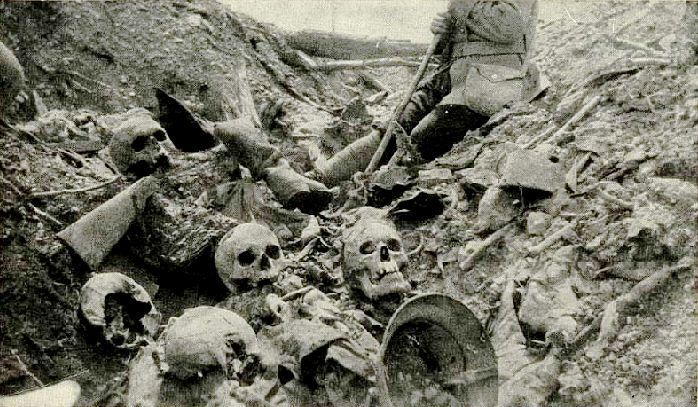
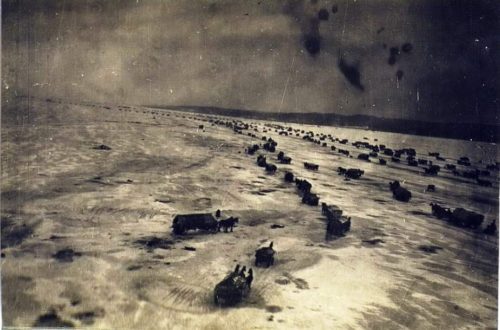
Lest we forget the insanity of war… these images are dedicated to all whose lives were unalterably changed by WW1 and its aftermath. World War I: Battle Of Verdun 1/4 World War I: Battle Of Verdun 2/4 World War I: Battle Of Verdun 3/4 World War I: Battle Of Verdun 4/4 Panorama of Verdun, filmed from the Fort de la Chaume, 1917 Related Articles Coming to Grips Christmas¦ and another war
You May Also Like
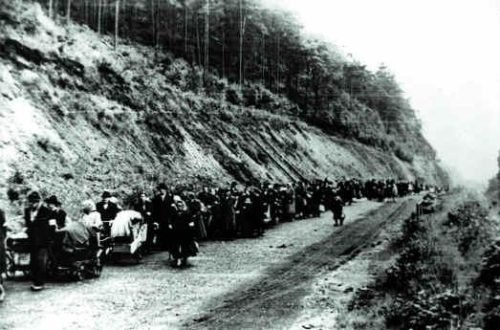
Sudeten Vertreibung- Sudeten German Expulsion
-
Zum Gedenknis- In Memory
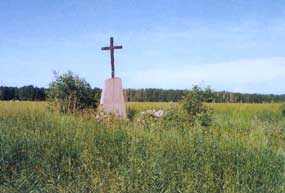
For those who thought that WW2 was long over, a rude reminder of its horrors and brutality have once again surfaced in the former home of our Senger family. In just the past year, more than 2000 people were found buried in a mass grave. It is thought that all were killed/ died at the war’s end. To learn more please visit the site dedicated to their memory. An English article is at Der Spiegel.
You May Also Like
Quick & Easy History
- Uncategorized
XVII. Armeekorps
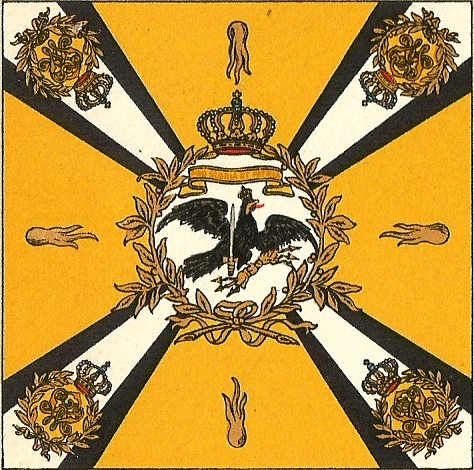
36th Division (German Empire) This is the major unit during WW1 to which we believe Richard Senger belonged and for which he fought on two fronts. The 36th Division was a component of the XVII Army Corps (Armeekorps). From Wikipedia, the free encyclopedia (Note: the Wikipedia article was removed, a modified article is available) 36th Division (36. Division); from August 2, 1914, 36th Infantry Division (36. Infanterie-Division) Active 1890-1919 Country Prussia/Germany Branch Army Type Infantry (in peacetime included cavalry) Size Approx. 15,000 Part of XVII. Army Corps (XVII. Armeekorps) Garrison/HQ Danzig Engagements World War I: Gumbinnen, Tannenberg, 1st Masurian Lakes, Gorlice-Tarnów Offensive, Somme, Arras (1917), Passchendaele, Spring Offensive, St. Quentin, 2nd…
-
Luftgau Kommando VII
This is the last unit in the Luftwaffe to which Luise Senger (Rabideau) belonged. all material which follows on this page © 1997-2005 Michael Holm Chef des Stabes: ? Obstlt Eckhard Krahmer, 1.7.38 – 1.4.39 Oberst Bruno Maass, 1.4.39 – 5.3.43 Oberst Otto Petzold, 5.3.43 – 8.5.45 Formed 4.2.38 in München from Luftgau-Kommando XIV.
You May Also Like
Quick & Easy History
- Uncategorized
Danzig History
DANZIG / GDANSK This page is concerned with the history of the whole Danzig territory as set up in 1919, not only with the town of the same name. (Please note the site from which this history was duplicated and edited no longer is functioning: http://www.geocities.com/CapitolHill/Rotunda/)
- Uncategorized
The Sengers -1920 to 1944
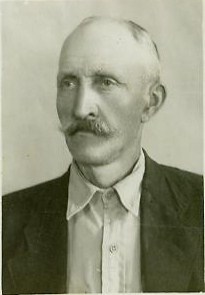
Richard Senger was a successful German farmer (Landwirt) in West Prussia. He worked and cared for his family’s farm with the help of his wife (Frieda), children (Luise & Erich), his brother Rudolf (Onkel Rudolf, known simply as Onkel) and his sister-in-law Erna Recht (Tante Erna). The homestead and lands had been in the Senger family since before 1893; when the home was built by Richard’s father and mother, Michael & Adelgunde Senger. The Senger farm was located on the banks of the Nogat River in Zeyervorderkampen (Kreis Elbing in Grosses Werder). At the time of the establishment of Freie Staat Danzig in 1920, the farm was the first farm…
-
Genealogy
I am not certain if there will be multiple posts here or simply one on-going post. Either way, I think it is worthwhile sharing some thoughts on ‘doing genealogy’ work. The first thing I noticed when I began tracing genealogical information is that there is lots of it! Some is easy to find, some is not. It is a curiosity to me that everything you really want or need seems to be missing. I am pretty sure that means, or perhaps better said, it almost seems there is a conspiracy out there somewhere. Somehow crucial information is always lacking. This generally means the genealogist (me or you in this case)…
-
Richard Senger- The Long Road
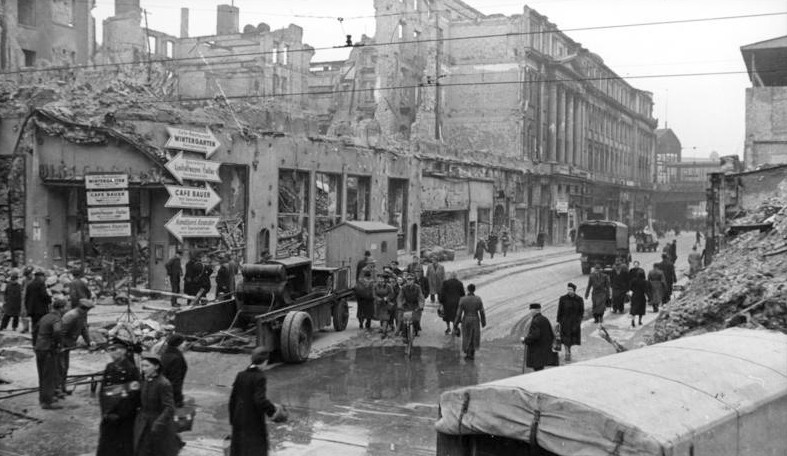
In late winter of 1944/45, the Senger’s farm was overrun and occupied by a command of the advancing Russian armies. The family furniture and possessions were stolen by non-Germans; the lives and history of the Senger family were unalterably, irretrievably changed. Only the Senger farm and two other farms in the village of Zeyersvorderkampen remained standing following the Soviet bombardment and artillery attacks which accompanied their nearly complete destruction and invasion of the area. Ultimately, the Senger farm was left as the sole ‘undamaged’ farm in Zeyersvorderkampen. At first, the farm was used to house Soviet commanders; ultimately, possession of the farm, lands, buildings and few remaining possessions were confiscated…
- Uncategorized
Frieda Senger- Post WW2 Gulag
As the Russians invaded West Prussia near the end of World War 2, they rounded up abled bodied Germans to ‘work’ as slave labor in their Gulags. These ‘unlucky’ Germans (some three million) were shipped by train to forced labor camps in the far East. Frieda Senger, along with her friend and neighbor, Edith Ebel, were among those shipped by rail into the Russian Gulags; in her case, the trip was to prisons some 1700 miles or 2700 kms east. She, like many others, was deported from her and her husband’s lands (which were now in the hands of the Russians) and forced into slavery; she was not seen or…
- Uncategorized
Gulag Perm-36
Although, we now know with certainty that Frieda Senger was not interned in Perm-36 Gulag; it does represent a Gulag proximate to her location. The photos in this article represent a good approximation of the Gulags in Chelyabinsk. Frieda Senger spent 2 and one half years starting in 1945 in the Gulags. Somehow, she was lucky and survived. Wikipedia article on post WW2 Germans in Russian Gulags These images are used with permission (Permission is granted to copy, distribute and/or modify this document under the terms of the GNU Free Documentation License, Version 1.2 or any later version published by the Free Software Foundation; with no Invariant Sections, no Front-Cover…