Quebec & Canada
-
Major Announcement: Completely Revised Genealogy Tutorials
🗺️ A New Home for ManyRoads Tutorials! Hello, fellow researchers and ManyRoads users, I have some exciting news to share about the evolution of our genealogy resources! To provide you with a faster, more flexible, and technologically advanced learning environment, the entire collection of ManyRoads Genealogy Tutorials, Checklists, and Historical Biographies has been successfully migrated to our new, dedicated documentation platform: TreeMagic.org/Genealogy. What This Means for You The new platform at TreeMagic.org is powered by the Ardens Documentation System, a robust and efficient system designed to enhance your research experience. Here’s what you can look forward to: ⚡️ Lightning-Fast Performance: The new system is optimized for speed, ensuring quick access…
-
French-America Resources
The following information, documents and maps are provided to help with research. ManyRoads French-America Libraries Maps: If there are additional resources you wish to see added to our collection, please me know. You may get in-touch with me directly via our contact page.
-
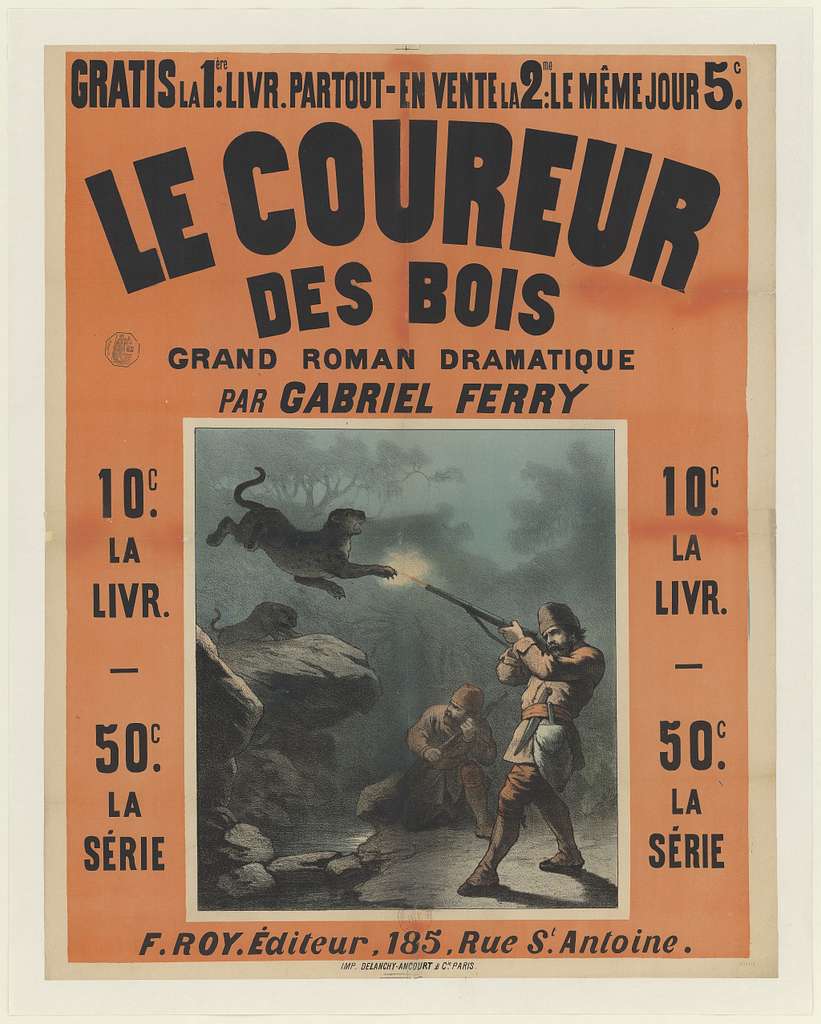
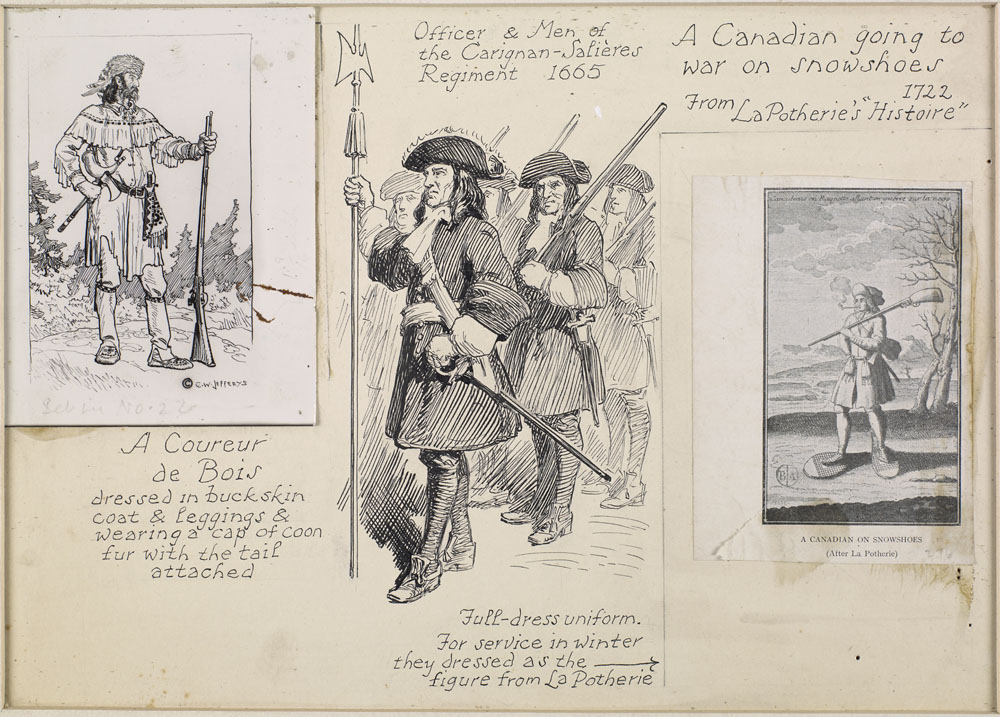
Searching for Coureur des bois
This document is being built (come back it is changing) Further (in-depth) Research: While a single, definitive list of all Coureurs de bois might not exist (due to the nature of their activities), there are resources that can help you identify them. It’s a matter of piecing together information from various sources. Here’s a breakdown of where to look and what to consider: 1. “Dictionnaire biographique du Canada” (Dictionary of Canadian Biography – DCB): This is an excellent starting point. While it doesn’t list every Coureur des bois, it includes entries for many prominent ones. These entries often provide details about their activities, families, and locations, which can lead you…
-
Régiment de Carignan-Salières Soldiers in our ancestry.
The Carignan-Salières Regiment (1665-1668) The Carignan-Salières Regiment: Heroes of New France (1665-1668) In the mid-17th century, New France was facing a significant threat from the Iroquois Confederacy. To protect the colony and its inhabitants, King Louis XIV of France dispatched the Carignan-Salières Regiment, a group of approximately 1,200 soldiers, to New France in 1665. Background The Carignan-Salières Regiment was formed in 1665, under the command of Lieutenant-General Alexander de Prouville de Tracy. The regiment consisted of four companies, each led by a captain: Mission and Achievements The Carignan-Salières Regiment’s primary mission was to protect New France from Iroquois attacks and to establish a French presence in the region. During their…
-
1666 & 1667 New France Census
If you research New France, as I do; you may find our new ‘sub-site’ of value (link below). The ManyRoads’ 1666/1667 New France Census site focuses on gathering and providing to combined content of both the first and second Censuses of New France. These enumerations were taken by intendant Jean Talon. He conducted the census largely by himself, traveling door-to-door among the settlements of New France. He did not include Native American inhabitants of the colony, or the religious orders such as the Jesuits or Recollets. The initial census was taken during the winter of 1665-66. But because the first census missed as many as 25% of the colony’s French…
-
Native Peoples & Indian wars of 1665-1779
I am in the process of gathering materials related to the North Eastern (New England/ New York & Bas Canada) Native Peoples, plus the wars between those Native Peoples and the European invaders encroaching upon them. My family, perhaps like yours, comes from both sides of that invasion. The libraries referred to on this page will change and evolve in the coming weeks. Currently our library is approaching 50 Documents (texts), images, etc., with more than 5,000 pages of information. I will publish another notice, both here and on social media, when I feel I have found the bulk of what I am likely to uncover. As with most of…
-
Using Cyprien Tanguay’s texts…
Over the past few weeks, I have received numerous requests for guidance on how to use Tanguay’s texts for genealogy research (and where to get them). I have to admit that it does seem a bit odd to me that these genealogy texts are not well understood. But after having received the requests, I did some searching on the web only to note that there are no real guides readily available for novices, so here’s my feeble attempt at creating one. By way of a bit of background, the texts discussed here are called: Dictionnaire généalogique des Familles Canadiennes depuis la fondation de la colonie jusqu’à nos jours (Genealogical Dictionary…
You May Also Like

“Dit” Names
-
“Dit” Names
The use of Dit names in French Canada (Bas Canada) is both very common and confusing. Currently, I am working with another Deyo cousin to attempt to unravel yet another Deyo mystery. This part of my family line is now being reworked for the fourth time! I think I might be getting good at it. Briefly here’s the mystery… It appears, now, that I might be descended from a woman we believe was named Honoree Beaulac. Her family name (surname) has the following common dit names (there may be others as well): Desmarais Lake Lefebvre Marest Beaulaque Hertel (a nice German sounding name, eh?) By the way you will also…
-
Rituel du Diocèse de Quebec
If you are performing research in Quebec, the Rituel du Diocèse de Quebec may prove useful in providing clues regarding the name or names of your ancestors. To quote the PRDH: Among Catholics, choice of first name wasn’t left to chance or parents’ imagination. On the contrary, the church liked to control the attribution of first names to ensure that on the day they were baptised, children received the name of a saint who would guide them throughout their life. In the Rituel du Diocèse de Quebec, which laid out the rules to follow for writing baptismal, marriage, and burial certificates in Quebec, Monsignor de Saint-Vallier stipulated, “The Church forbids…
You May Also Like
“Dit” Names
-
Quebec Genealogy
This is a copy of my Quebec Genealogy presentation delivered on 9 October 2010 at the Parker Genealogical Society in Parker, CO. You may download it to your PC or read it on-line below. The Download [download id=”13060″]
-
Lacolle, Quebec- A brief history
Lacolle is the area from which the Joseph Dion family emigrated to the United States. Historically both Rabideau and Dion/ Deyo family members lived and traversed this region. Click here to read about the Lacolle Military Battles. source [the original site has been removed- minor edits and corrections from the original text made by ManyRoads] First written mention of Lacolle can be traced back to July 4, 1609 when Samuel de Champlain and his entourage stopped briefly at the mouth of a small stream for a meal before continuing southward up the Richelieu River into the lake which now bears his name. In his journal Champlain referred to the location…
-
Lacolle Battles
Both the Rabideau & Deyo families have roots in the area surrounding Lacolle Quebec. In the early to mid-1800s Lacolle was an area that saw numerous battles and skirmishes, both in the war of 1812 and the Patriotes Rebellion of 1837-1838 including: Battle Of Lacolle Mills (1812) Second Battle of Lacolle (1814) Battle at Odelltown and the Battle of Lacolle (November 7 & 9, 1838) Click here to read a more general area history for Lacolle Battle Of Lacolle Mills (1812) source Wikipedia The Battle of Lacolle Mills was fought on November 20, 1812, during the War of 1812. In this relatively short and fast battle, a very small garrison…
-
Quebec’s French speaking Native People (Metis)
This material has been completely revised & updated. Access it here! Original Source Article Names used to designate Natives, other than the name of their tribe or nation, include : Savage (a pejorative, rarely used today but common only a half-century ago), Indian, North American Indian, Native, and Amerindian (this one seems to be used only in French). In French, the corresponding terms are: Sauvage, Indien, Indien nord-americain, Autochtone and Amerindien. Metis means mixed blood, that is initially one parent was White, and one was Native, while later one or both were Metis. While a Metis can be any place where there are Natives and Whites, Metis Nation is defined…
-
Who were Christiaan Christiaansz and Marie Anne Christiansen?
This is a copy of the article by Eugenie Fellows that appeared in the Spring 2000 edition of the Memoires de la Societe Genealogique Canadienne-Francaise which purported to solve the mystery. Unfortunately the author disregarded a very important note that was included in the original article (in the October 1997 issue of the New York Genealogical and Biographical Record) on which she based her article that throws doubt on the assumption that Marie Anne’s parents were Christian Christiansen and Elizabeth Elderszen. The original article by Barbara A. Barth was published in two installments and was about the “Family of Ysbrant Eldersz of Rennselaerswyck”. It is rather a lengthy article (17…
You May Also Like
A Great Find!
-
Marie Anne (Annetje) Louise Christiansen
source: Rootsweb (original source link was removed) Born: Abt 1675-1676, Corlaer (Schenectady), NY, US Baptized: 12 Jul 1699, Notre-Dame-Cathédrale, Montreal, Quebec, Canada Marriage: Moise DUPUIS 21 Jul 1697, Reformed Dutch Church, Albany, NY, US Died: 26 Oct 1750, Laprairie, Quebec, Canada Buried: 27 Oct 1750, La-Nativité-de-la-Bienheureuse-Vierge-Marie-de-Laprairie, Quebec, Canada General Notes: Marie Anne (Annetje) Louise Christiansen: Analysis: Marie Anne was reportedly born ca. 1672/1676 in Corlaer (Schenectady), NY(1). A record of her birth has not been found. She married Moise DUPUY on 21 Jun 1697 in the Reformed Dutch Church of Albany, NY(2). Moise was indicated as being from Canada, but both were living in Albany at the time of the…
You May Also Like
A Great Find!